
A Pilgrim to Bumthang
A Pilgrim's Journey Through Bumthang
Overview
“If Bhutan has a soul, it lives in Bumthang”
Bumthang—comprising the four valleys of Chokhor, Tang, Ura, and Chumey—is Bhutan’s spiritual heart, home to ancient temples, sacred lakes, and many of the legends of Guru Rinpoche. This itinerary explores its most important pilgrimage sites at a relaxed pace, with a dedicated day to cook, share meals, and connect with the local community.
Your journey begins with a short domestic flight from Paro and can either return by air or conclude with a scenic overland drive through central Bhutan and its spectacular mountain passes.
Duration
06 Days 05 Nights
Season
Spring & Autumn
Altitude
3800 m
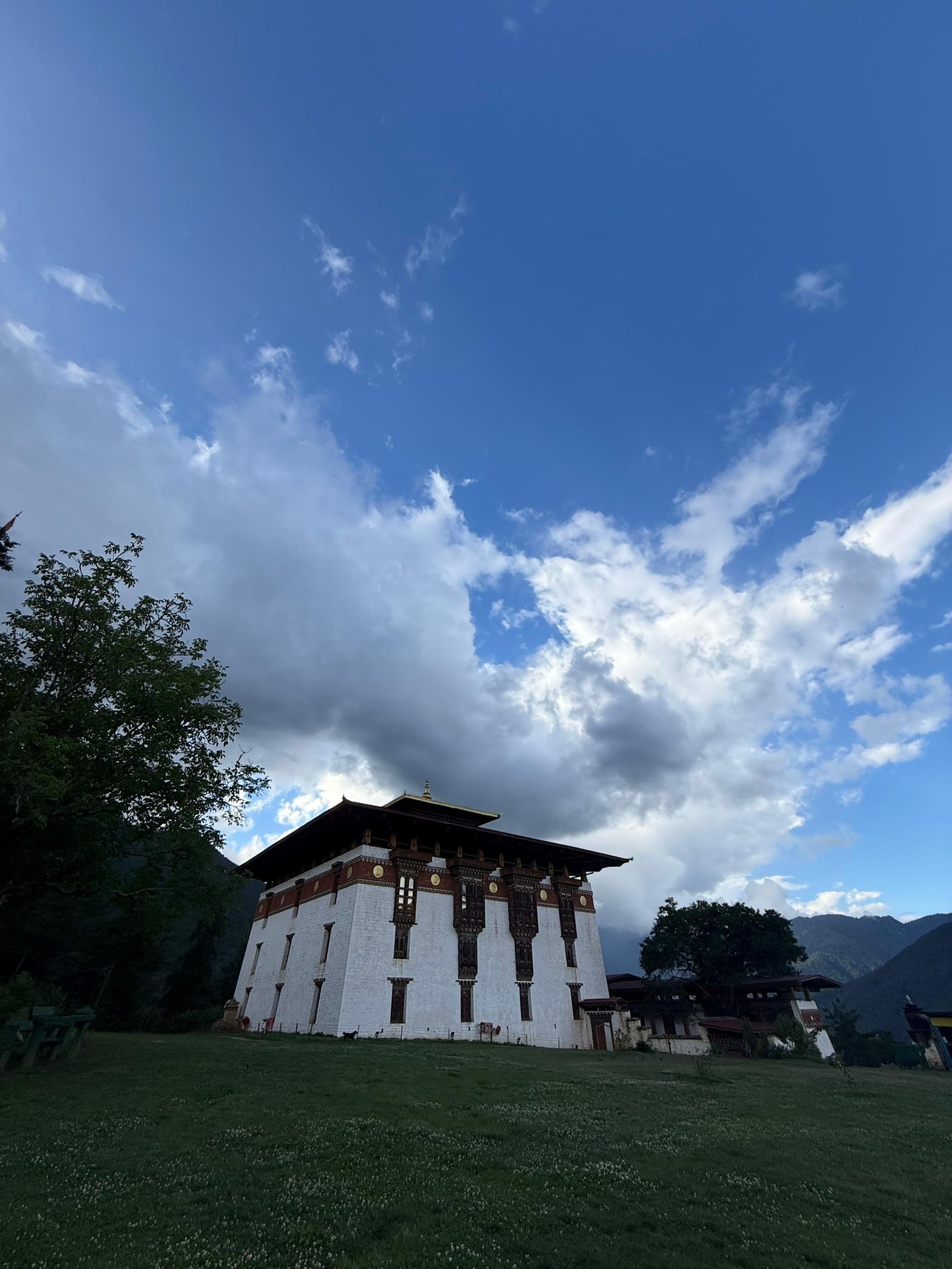
Day1: Arrival in Bumthang & Jakar Dzong
Fly from Paro into Bumthang (Bathpalathang) Domestic Airport, a short and scenic flight over central Bhutan’s forested ridgelines. On arrival, settle in and take the afternoon at an easy pace before visiting Jakar Dzong (“Castle of the White Bird”), perched on a ridge above the valley and one of Bhutan’s largest dzongs. Walk its courtyards as the light softens over the Chokhor Valley below and take a quiet moment to get your bearings — physically and spiritually — before the pilgrimage ahead.
Day 2: Jambay Lhakhang, Kurjey Lhakhang & Tamshing Lhakhang
Today is devoted to three of Bumthang’s oldest and most sacred temples, all within the Chokhor Valley:
• Jambay Lhakhang — believed to be one of 108 temples built in a single day in the 7th century by Tibetan King Songtsen Gampo to pin down a demoness obstructing the spread of Buddhism. It remains one of the oldest temples in Bhutan.
• Kurjey Lhakhang — the site where Guru Rinpoche is said to have left a body imprint in the rock while subduing a local deity. This complex of three temples is among the most sacred pilgrimage sites in the country.
• Tamshing Lhakhang — founded by the treasure-revealer Pema Lingpa, home to remarkable original 16th-century murals rarely seen elsewhere in Bhutan.Spend time at each in quiet reflection, and take part in whatever prayers or rituals are unfolding that day — Bumthang’s temples remain living places of worship, not museums.
Day 3: A Day of Bumthang Taste & Tradition
Today is set aside entirely for experiencing Bumthang through its food, spent with a local family in an authentic village home. Bumthang’s cuisine is distinct within Bhutan — shaped by its high altitude and cooler climate, favoring buckwheat, wheat, and dairy over the rice grown in warmer valleys.
You’ll join your hosts to learn and help prepare local specialties by hand, including:
• Puta (buckwheat noodles), Bumthang’s signature dish
• Khule (buckwheat pancakes), often served with honey or ema datshi
• Fresh Bumthang cheese and butter, made from local dairy — a valley long known for it
• Seasonal vegetable and meat dishes prepared the traditional way, over a wood fire Sit down together for a long, unhurried meal, shared with genuine Bumthang hospitality —
this is less a “cooking class” than an afternoon spent as a guest in someone’s home, cooking, tasting, and talking. Many travelers find this the most human, most memorable day of the entire trip.
Day 4: Tang Valley & the Burning Lake
Travel into the quieter, more remote Tang Valley to visit Membartsho, the “Burning Lake” — one of Bhutan’s most sacred sites, where the treasure-revealer Pema Lingpa is said to have dived into the water with a burning lamp and emerged with both the flame still alight and sacred treasures (terma) in hand. Prayer flags line the gorge above the water, and pilgrims often come here to pray, meditate, or simply sit with the site’s quiet power. If time allows, continue to Ogyen Choling, a beautifully preserved manor house and former dzong, now home to a small museum of traditional Bhutanese rural and religious life — a rare window into how noble and monastic households once lived in this valley.
Day 5: Ura Valley: Bhutan's Highland Village
Travel to Ura Valley, the highest and most traditional of Bumthang’s four valleys, known for its cluster of closely built stone houses and its remote, high-altitude character. Visit Ura Lhakhang, the valley’s central temple, and take time to walk through the village itself, where farming life continues much as it has for generations.If your visit coincides with the season, you may also see fields of the valley’s prized potato and wheat crops, or catch weavers at work on the region’s distinctive woolen textiles.
Day 6: Konchogsum Lhakhang & the Art of Yathra Weaving
Visit Konchogsum Lhakhang, an ancient temple believed to date back over a thousand years, rebuilt after a fire and known for its Buddha statue and old bronze bell — legend holds the bell once flew here from Tibet. Take time for prayer and quiet reflection before spending the afternoon in Chumey Valley, home to Bumthang’s celebrated yathra weaving tradition — intricately patterned wool textiles woven on backstrap looms, unique to this region of Bhutan.
Visit a local weaving workshop to see the process firsthand and, if you wish, bring home a handwoven piece as a lasting memory of the journey.
Day 7: Departure: Fly or Travel by Road
Your pilgrimage closes today, with two options depending on your preference:
• By air: A short domestic flight back to Paro, retracing your original route over central Bhutan’s ridgelines.
• By road: A full but spectacular overland journey westward, crossing Yotong La and Pele La passes, with sweeping mountain views and stops in the Trongsa and Wangdue valleys along the way — a fitting, unhurried final look at the country you’ve just spent a week moving through slowly. Either way, you leave Bumthang having touched the oldest, most sacred ground in Bhutan — and, for one full day at least, having tasted it too.
Quick Info
Fitness: The Taktsang hike on Day 5 is the most physically demanding part of the trip— roughly 4–5 hours round trip with a steady uphill climb. Ponies are available partway for those who prefer.
Privacy: Your Pranic Healing session is conducted one-on-one and held in confidence.
Dress: Modest, comfortable clothing is recommended throughout, with shoulders and knees covered at temples and monasteries.
Guide & permits: All travel in Bhutan requires a licensed local guide and a Sustainable Development Fee, typically arranged through a registered Bhutanese tour operator before arrival
Includes & Excludes
Includes
- Luxury or boutique accommodation throughout your stay
- Daily breakfast, lunch, and dinner as outlined in the itinerary
- Airport pick-up and drop-off within Bhutan
- Private transportation for all scheduled activities
- Professional English-speaking guide
- Experienced wellness facilitator throughout the journey
- Daily meditation and mindfulness sessions
- Pranic Healing and wellness activities (where included)
- Guided hiking and nature walks (as per itinerary)
- Visits to monasteries, temples, and cultural sites
- Entrance fees to all listed attractions
- Bottled drinking water during excursions
- Bhutan Sustainable Development Fee (SDF) (if included in your package)
- Government visa processing assistance
- All applicable government taxes and service charges
Excludes
- International airfare
- Travel insurance (strongly recommended)
- Personal expenses and shopping
- Alcoholic beverages and premium drinks
- Laundry services
- Spa treatments not included in the itinerary
- Optional activities and excursions
- Personal healing or private consultation sessions unless specified
- Tips and gratuities for guides and drivers
- Meals not mentioned in the itinerary
- Visa fees (if not included in your package)
- Expenses arising from flight delays, weather conditions, natural disasters, or unforeseen circumstances
